

Aluminum Vs Vinyl Impact Windows: Which Holds up in FL?

Replacing windows in Southwest Florida takes more than picking glass that stops debris. The frame material has to stand up to relentless UV exposure, salt spray off the Gulf, and humidity cycles that test structural integrity year after year. Homeowners comparing aluminum vs vinyl impact windows often find generic national advice skips these local stressors entirely. Door Depot manufactures and installs both aluminum and vinyl impact windows locally, which means we've watched both materials perform in SW Florida conditions over years of service, not just on a spec sheet.
This comparison sticks to performance in Sarasota, Manatee, and Charlotte counties rather than broad industry generalizations. Knowing the environmental demands here helps you pick a product that holds its function and looks through decades of coastal weather.
SW Florida Climate Demands on Window Frames
Our region attacks building envelopes with a combination of factors you rarely see elsewhere in the country. High salt content in the air speeds up corrosion on metal surfaces. Intense ultraviolet radiation breaks down chemical bonds in many synthetic materials over time. Evaluate window frames against this triad of heat, moisture, and salinity, not against durability ratings built for temperate inland climates.
Humidity cycles make materials expand and contract daily, creating stress points at joints and seals. A frame that holds up fine in a dry climate can fail early once it's hit with thousands of wet-dry cycles a year on top of thermal loading. That's what makes the choice between aluminum and vinyl impact windows a technical decision rooted in local atmospheric chemistry, not a style preference.
Vinyl Impact Window Durability in Coastal Heat
Modern vinyl formulations differ a lot from the brittle plastic windows installed decades ago. Modern vinyl impact windows use UV-stabilized compounds engineered specifically for southern climates, which prevents the warping and discoloration older generations were known for. These additives absorb ultraviolet energy before it degrades the polymer matrix, so the frame keeps its shape even through prolonged summer heat waves.
Salt air poses almost no corrosion risk to vinyl, because the material is chemically inert to sodium chloride. Unlike metal, vinyl doesn't oxidize or pit when Gulf breezes carry marine aerosols across it. That resistance means there's no protective coating to scratch or wear off over time.
Vinyl impact window durability also shows up during storm events. Reinforced extrusions with internal steel or aluminum stiffeners meet Miami-Dade County high-velocity hurricane zone requirements without giving up thermal efficiency. The material flexes enough to absorb wind load deflection without permanent deformation, and it returns to shape once pressure equalizes.
Vinyl won't get you the same slim sightlines as aluminum, though. For certain architectural styles, that matters.
Aluminum Window Pros and Cons for Hurricane Zones
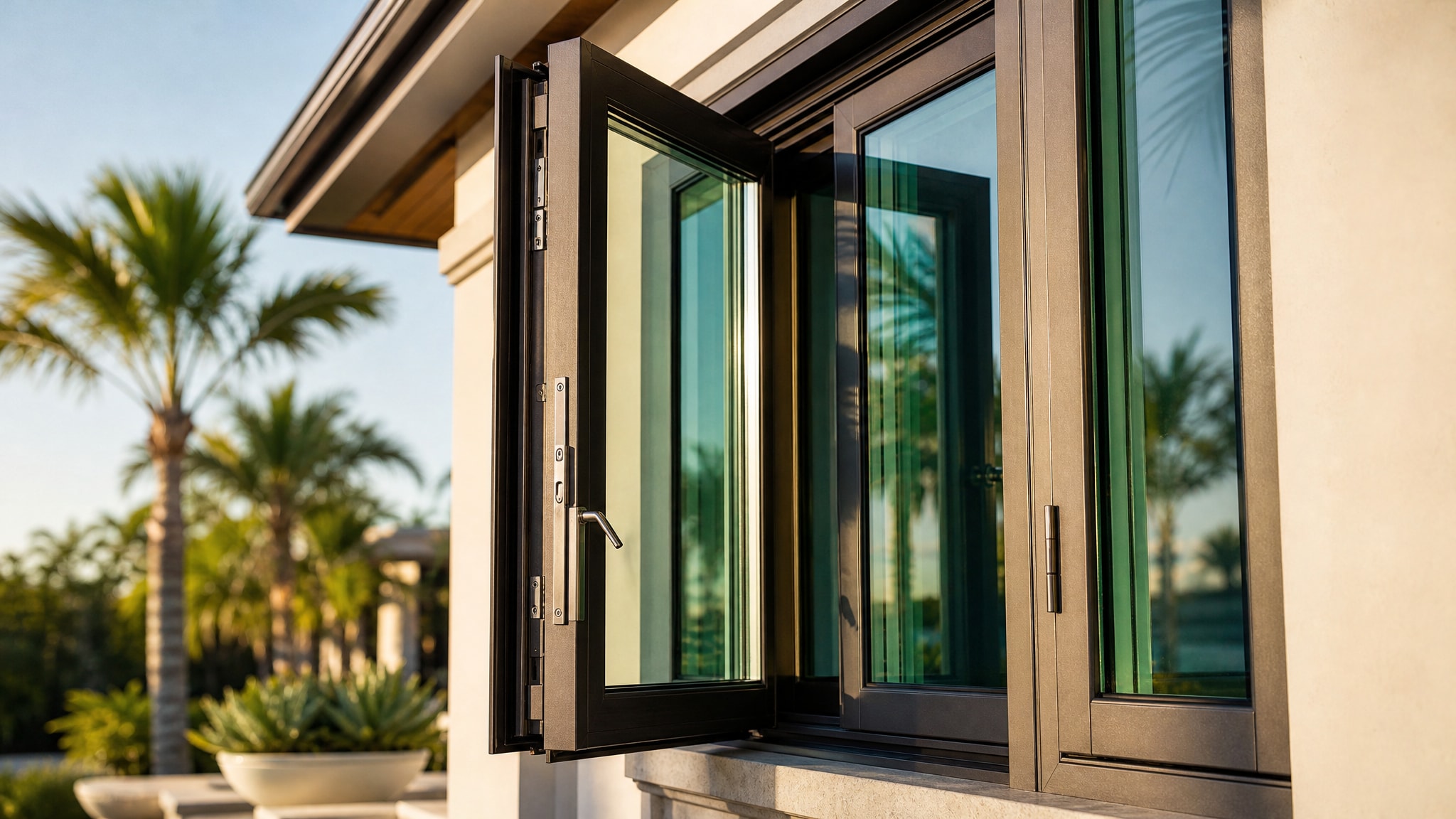
Aluminum offers a strong strength-to-weight ratio that allows for larger glass spans with narrower frames. Architects and homeowners after maximum daylight and unobstructed views often prefer aluminum for this reason, especially in contemporary designs where minimal framing is the goal. The metal's rigidity supports heavier impact glass assemblies without bulky reinforcement inside the frame profile.
Uncoated aluminum frames installed within a mile of the Gulf can show pitting and oxidation within five to seven years. Properly finished units resist corrosion significantly longer. Anodized or powder-coated finishes put a barrier between the raw metal and corrosive elements, but the quality of that finish is what determines real-world performance. Factory-applied coatings baked onto the extrusion before assembly hold up far better than field painting or aftermarket treatments.
That maintenance dependency is a primary consideration in aluminum window pros and cons for coastal properties. You need to check finish integrity periodically and deal with any chips or scratches right away, before the metal underneath starts to degrade. The trade-off for aluminum's structural advantages is this ongoing vigilance that vinyl simply doesn't demand.
Salt Air Window Corrosion and Maintenance Reality
Long-term upkeep looks completely different between these two materials out here. Vinyl needs only periodic cleaning with mild soap and water to clear surface salt deposits and biological growth. No sealing, painting, or coating renewal, regardless of how close you are to open water.
Aluminum asks for a more active maintenance routine to keep both its appearance and structural integrity. Salt air window corrosion starts at microscopic breaches in the protective finish and spreads laterally underneath the coating before it's visible. Regular inspection and quick touch-up of damaged spots keeps minor finish flaws from turning into corrosion problems that require frame replacement.
Where the finish comes from matters for longevity. Factory-controlled application gives you consistent coating thickness and proper curing. Field-applied finishes skip the controlled environment and pretreatment that make factory coatings durable enough for decades of Gulf Coast exposure. Source from a manufacturer who controls the whole production chain, and the finish quality actually matches what these windows have to face.
Energy Efficiency and Thermal Performance Comparison
Cooling costs dominate residential energy budgets throughout Southwest Florida. Vinyl frames typically have lower thermal conductivity than aluminum, which adds up to measurable cooling savings in Florida's year-round warm climate. The material itself acts as an insulator, cutting heat transfer through the frame assembly and keeping interior glass temperatures closer to room temperature.
Aluminum conducts heat readily, which makes it thermally inefficient unless it's built with thermal break technology. Thermal breaks insert a non-conductive barrier between the interior and exterior aluminum surfaces, interrupting the path heat travels. Without that feature, aluminum frames act as thermal bridges, pulling outdoor heat straight into conditioned spaces during our long cooling season.
Even with thermal breaks, aluminum rarely matches vinyl's inherent insulating value. If lowest possible cooling costs is your priority, vinyl gets you there without the added engineering. Whether aluminum or vinyl offers better energy efficiency in Sarasota and Manatee counties really comes down to whether you're willing to pay for thermal break aluminum to get closer to vinyl's baseline performance.
Cost Differences and Manufacturer Direct Value
Pricing varies with frame size, glass specifications, finish options, and installation complexity. Vinyl generally carries a lower base cost than aluminum, thanks to material expense and simpler manufacturing. Premium vinyl products with extra reinforcement and better hardware, though, can creep up toward entry-level aluminum pricing.
Buying manufacturer-direct changes the cost comparison by cutting out distributor markups and third-party margins common in the regional supply chain. When the company making your windows also installs them, pricing reflects actual production and labor costs instead of layered profit centers. That vertical integration often narrows the price gap between materials, which puts aluminum within reach for budgets that might otherwise default to vinyl.
Sourcing locally also means warranty claims and service calls go straight to the manufacturer instead of through intermediaries. If a component fails or needs adjustment years after installation, you're dealing with the people who built and installed it. That direct accountability has real value beyond the sticker price when you're weighing total cost of ownership.
Choosing the Best Window Frame Material for Your Home
Your decision should line up with your home's architectural style, exposure conditions, budget, and tolerance for maintenance. Historic or traditional homes in Sarasota often suit vinyl's proportions and color options better than aluminum's modern look. Contemporary waterfront properties may justify aluminum's maintenance demands to get the sightlines and structural spans they're after.
Proximity to open water tips the calculus toward vinyl for most homeowners who don't want to commit to aluminum's maintenance schedule. Properties a few blocks inland face less aggressive salt exposure, which makes properly finished aluminum a more viable option with lower corrosion risk. Budget constraints favor vinyl in most scenarios, though manufacturer-direct sourcing can make aluminum competitive for projects where its specific advantages matter.
For broader guidance on selection criteria beyond frame material, review our resource on choosing hurricane impact windows. Understanding the distinction between hurricane windows vs impact glass also clarifies terminology you'll run into during product evaluation. Once you've settled on a material, the impact window installation process is worth reading up on. Residents specifically evaluating impact windows in Manatee County should factor in localized exposure when weighing material suitability.
Frequently Asked Questions
Does vinyl hold up structurally against hurricane-force winds as well as aluminum?
Yes, modern vinyl impact windows with internal reinforcement meet the same Miami-Dade HVHZ testing standards as aluminum for wind load and debris impact. While aluminum has higher inherent tensile strength, engineered vinyl profiles are designed specifically to handle Florida hurricane forces without permanent deformation. Structural adequacy depends on proper engineering and testing certification rather than material alone.
How does salt air in SW Florida affect aluminum versus vinyl window frames over time?
Salt air causes oxidation and pitting on unprotected aluminum surfaces, potentially compromising finish integrity within five to seven years near the coast. Vinyl is chemically inert to salt and shows no corrosion regardless of marine exposure. Properly coated aluminum resists this degradation but requires periodic inspection and maintenance that vinyl never needs.
What are the maintenance differences between aluminum and vinyl impact windows in coastal environments?
Vinyl requires only occasional washing with soap and water to remove salt residue and organic growth. Aluminum needs regular inspection for finish damage plus immediate touch-up of any scratches or chips to prevent subsurface corrosion. Over twenty years, vinyl's cumulative maintenance time and cost are substantially lower than aluminum's in salt-air environments.
Which frame material offers better energy efficiency for reducing cooling costs?
Vinyl provides superior thermal insulation inherently, reducing heat transfer through the frame without additional components. Aluminum requires thermal break technology to approach vinyl's performance, adding cost and complexity. For most SW Florida homes where cooling dominates energy use, vinyl delivers better efficiency per dollar invested.

Having dealt with harsh Florida weather, I completely relate to the importance of choosing the right impact windows. Aluminum or vinyl? It’s like deciding between different strategies in "Slope Game"—each choice has its pros and cons. Investing wisely here not only protects our homes but also shapes our comfort and security.