

Garage Door Won't Close After Storm? What to Check

A garage door that won't close after a storm passes through Southwest Florida can mean anything from a misaligned sensor to real structural damage. High winds, driving rain, and power fluctuations hit Sarasota, Manatee, and Charlotte counties differently than routine wear ever does. Before you touch anything or call for service, figure out what the storm actually did to your system. That's what keeps you safe and stops a small problem from becoming a big one.
Immediate Safety Checks Before Troubleshooting
Storm aftermath brings hazards normal maintenance never does, so check the area before you touch any component. Downed power lines near the driveway, water pooling around the opener motor, or visible spring damage all need a professional look before you troubleshoot anything. Forcing a stuck door when cables are compromised or springs have snapped can snap a panel or hurt you in seconds.
Confirm electrical safety and structural stability before you try to figure out why the system won't run. Water in the opener housing creates shock risk even if the unit looks dry on the outside. Wind-driven debris may have weakened mounting hardware that still looks fine at first glance. If the door hangs unevenly, grinds when you move it by hand, or shows gaps between sections, stop. Treat that as a structural hazard, not a mechanical nuisance.
Diagnosing Electrical and Sensor Issues After Storms
Power surges from lightning or grid restoration often damage opener logic boards while leaving the mechanical parts completely intact. Your garage door storm damage may be purely electrical even when the door itself shows no physical harm. Post-storm sensor misalignment usually shows up as blinking opener lights despite a clear path, and wind vibration shifting the bracket mounts is usually the actual cause, not an obstruction blocking the beam.
Moisture in exterior keypads or wall buttons is another common post-storm failure, and it's specific to Florida humidity and driving rain. If your garage door won't close after a storm but the opener hums normally, check whether condensation has fogged the photo-eye lenses or corroded the wiring at the sensor brackets. Wipe the lens surfaces with a dry cloth and check the wire connections. That resolves a lot of apparent sensor failures without new parts or a technician visit.
Identifying Garage Door Track Damage and Alignment Problems
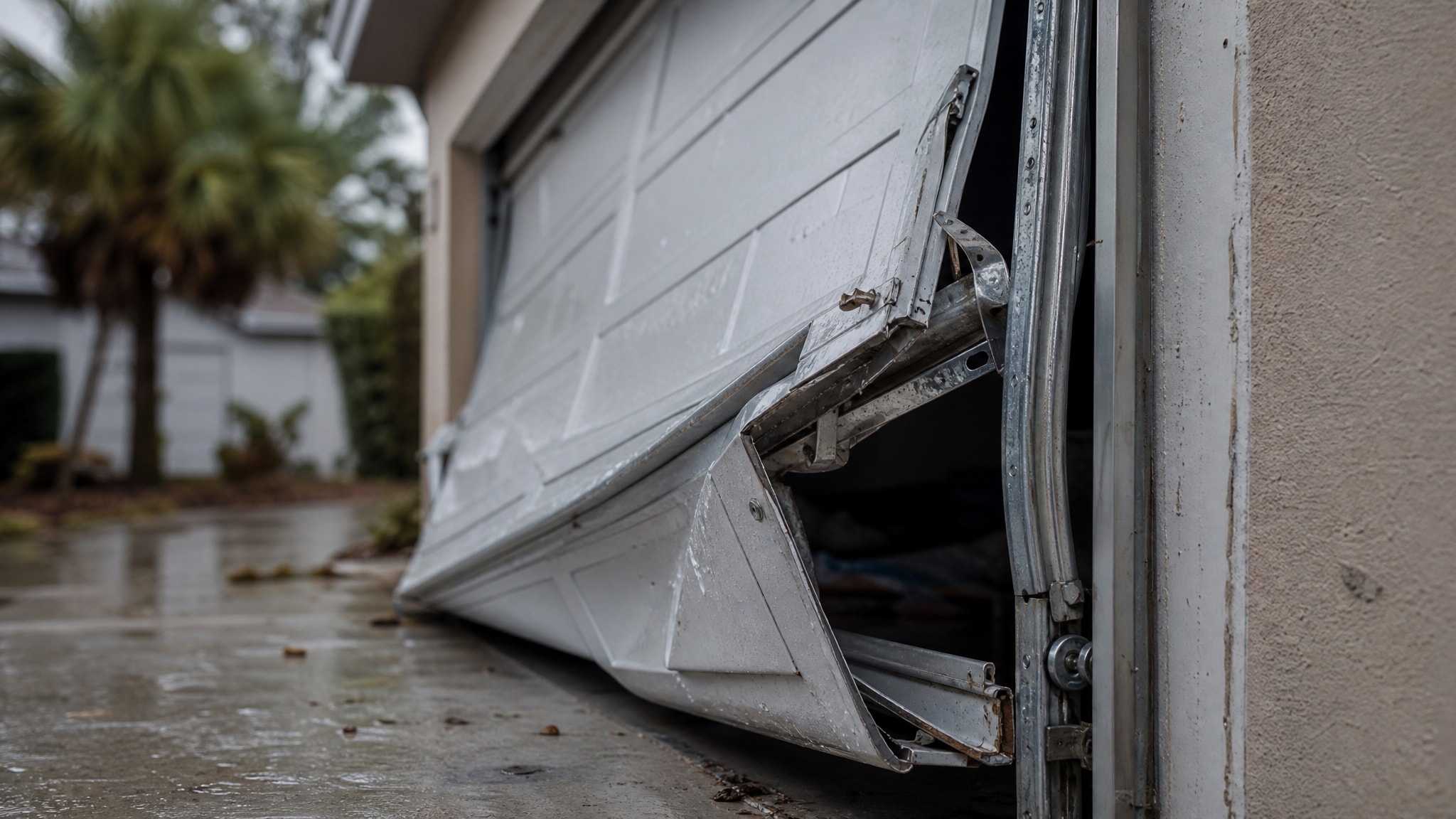
High winds put lateral pressure on a garage door that can bend the tracks or loosen the mounting brackets, and that stops the door from closing smoothly even when the panels themselves are fine. Lateral wind loads during a hurricane can shift garage door tracks several millimeters off plumb, creating binding points that block automatic closing even with no visible damage. Inspect the vertical track sections where they meet the header and the floor. Look for gaps between the rollers and the steel. That's the sign of wind-induced shifting rather than normal wear.
Garage door track damage from storms differs from gradual misalignment because it happens all at once and often affects both sides unevenly. Check each mounting bracket along the vertical and horizontal runs for pulled fasteners or elongated holes. Those let the track flex under load and bind the rollers mid-travel.
If you find loose brackets, tightening them may fix the problem for now, but bent track steel needs professional straightening or replacement to stay safe long-term.
Assessing Bent Garage Door Panel Fix Options vs Replacement
Localized panel damage from flying debris sometimes goes beyond cosmetic and compromises the door's structural integrity; other times it's just a dent. Impact-rated doors often take repairable surface damage because their reinforced construction absorbs energy without failing outright, while builder-grade doors can crack through the core under the same stress. A bent garage door panel fix only works when the deformation stays within the outer skin and doesn't touch the hinge points, roller stiles, or internal reinforcement channels that carry wind load.
That kind of repair won't restore full hurricane protection if the underlying structure has yielded, even if the door still closes and locks normally afterward. You need to tell the difference between a dent that's just cosmetic and a crease that changes how the section transfers force to the panels next to it during high wind. When several panels show impact marks, or hinges pull away from damaged sections, replacement is safer and cheaper than a field repair that can't guarantee code compliance.
When to Call a Professional for Garage Door Repair After Hurricane
Some damage demands a professional, no matter how comfortable you are with DIY. Spring tension issues, severe track deformation, a burned-out opener motor, or frayed cables need trained technicians with the right tools and safety gear. Garage door repair after hurricane conditions also means checking that the restored system still meets current Florida building codes for wind load resistance. That's more than just getting the door to open and close again.
A post-storm inspection should document existing conditions for insurance and catch hidden damage that might not show up until the next major storm. Local garage door installation experts know the regional code requirements, and they can tell you whether repaired components still carry rated protection or whether a partial failure has voided the system's certification. Wait on marginal damage and you risk complete failure during the next storm, right when emergency service availability drops and lead times stretch out.
Evaluating Builder-Grade vs Impact-Rated Performance
A door that fails after every significant storm is telling you builder-grade construction can't handle Southwest Florida long-term. Understanding builder-grade versus impact-rated differences helps you decide whether more repairs make financial sense or replacement is the better bet over the next decade. Impact-rated systems use heavier gauge steel, reinforced struts, and engineered mounting hardware built for coastal wind loads, not minimum national standards.
Door Depot manufactures impact-rated garage doors locally in Sarasota to meet Southwest Florida's specific wind load requirements, so replacement units address regional storm vulnerabilities instead of generic specs. If you need the best hurricane garage door for Florida homes, manufacturer-direct options come with proper installation and warranty coverage tied to actual storm performance, not theoretical ratings. These custom garage doors built locally in Sarasota account for local exposure categories and opening sizes that national catalog products often miss.
Preventative Maintenance to Avoid Future Storm Closures
Seasonal maintenance built around hurricane season cuts down on emergency calls during the weeks when every technician in the county is already booked. Lubricate moving parts before wet season starts, since salt air and humidity speed up corrosion between storms. Test the manual release mechanism every few months so you know you can operate the door during a power outage instead of finding out it's seized at the worst possible moment.
Inspect weather seals, track alignment, and hardware tightness twice a year to catch minor issues before they turn into storm failures. Check that the photo-eye sensors stay clean and aligned after any nearby construction or landscaping work that might have bumped the brackets out of position. Proactive care costs far less than emergency repair, and it means the system will actually work when conditions turn bad fast.
Slope Game can become more enjoyable when players focus on consistency instead of chasing a perfect run immediately. Like many Arcade Games, it rewards patience, repetition, and gradually improving personal performance.