

New Entry Door Installation Near Me in SW Florida

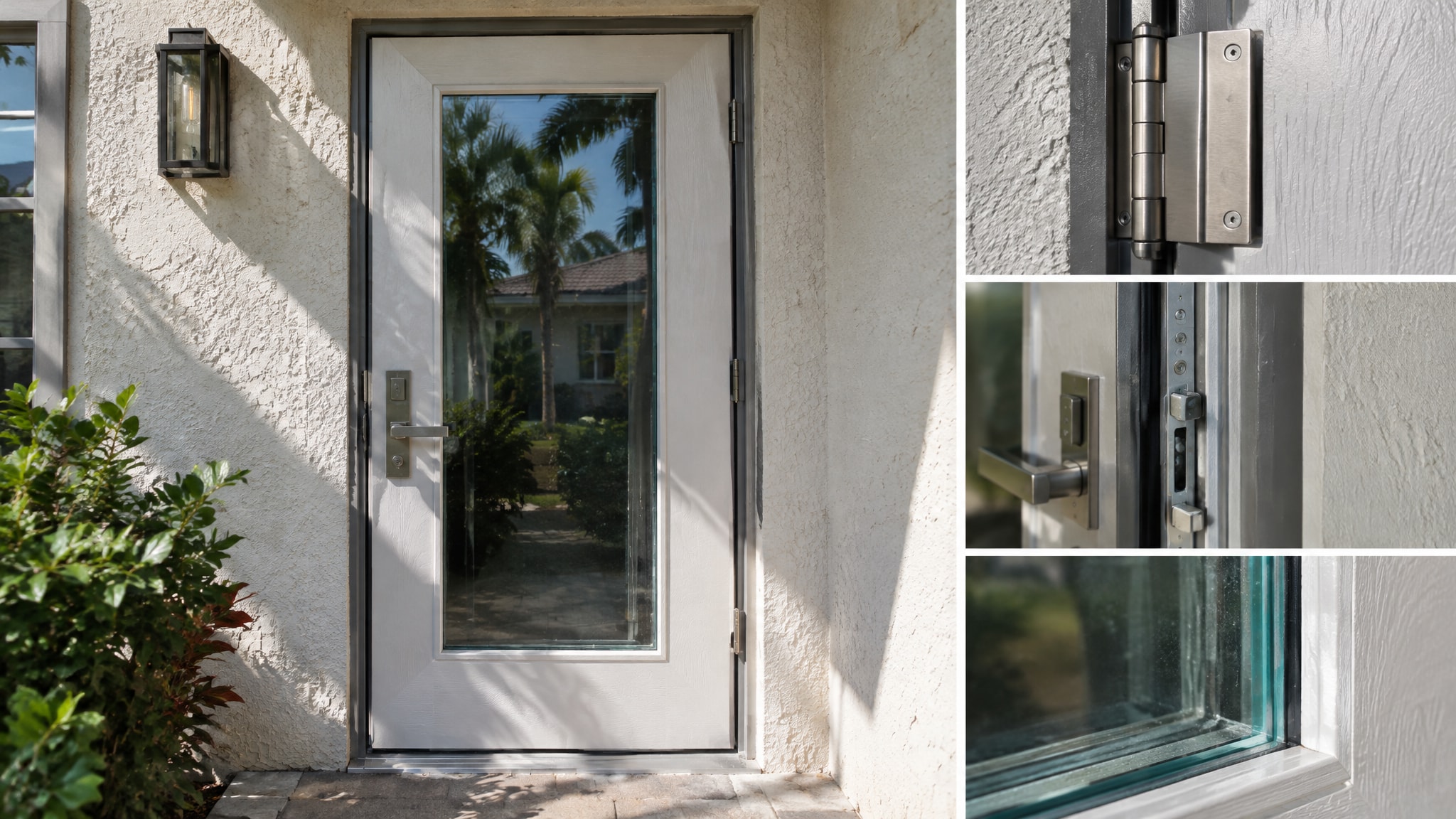
If you're searching for new entry door installation near me in Southwest Florida, here is the short answer. Door Depot of SW Florida manufactures, assembles, and installs its own entry doors for homes in Sarasota, Manatee, and Charlotte counties. The company that builds your door is the company that shows up to fit it.
That matters more here than in most places. Salt air, summer humidity, and hurricane season punish a door that is out of square by even a quarter inch.
Entry door installers serving Sarasota, Manatee, and Charlotte counties
We work in three counties and name them plainly because a general "serving Florida" claim tells you nothing about whether a crew can reach your street. Search results for this topic are mostly out-of-region companies and directory listings, and neither one builds a door a few miles from your house.
Sarasota County. Homeowners here replace entry doors for three common reasons: a swollen or rotting slab, a request for glass that lets in more light, or an upgrade to a storm-rated unit. Our crews handle all three, and for replacement projects after storm damage we can build to the opening that's actually there.
Manatee County. Front door installation in Manatee County runs the same way: we measure the opening, build the door to fit it, and install it ourselves. Builders working on new construction in the county can use us for supply and installation together, which keeps one company responsible for the door from the shop floor to the frame.
Entry door contractor for Charlotte County homes
As an entry door contractor in Charlotte County, we cover homes from older neighborhoods to new builds. Many Charlotte County homeowners are weighing storm protection at the same time, so it helps to see impact entry door options in Port Charlotte before you book a measure.
To check whether your address is covered, look at the county. If the property sits in Sarasota, Manatee, or Charlotte County, it's inside our service area, and if you're unsure, send the address with your quote request and we'll confirm it before anything else happens. We don't install outside those three counties.
What a new entry door installation includes
A standard job has three parts. The old door comes out, the new door is set and sealed in the opening, and the hardware is adjusted until the door swings, latches, and locks the way it should.
Removal covers the old slab, and usually the old frame and exterior trim that come with it. Setting means leveling the new unit, fastening it through the frame, and shimming the gaps so the door doesn't bind in August humidity. Sealing closes the perimeter against water and air. Then we adjust the hinges, strike plate, and lockset, because a door that's hung correctly can still stick if the hardware is a hair off.
Two things change that scope. The first is damage we find once the old door is out, such as a soft sill or rotted framing. The second is permit work, since some replacements need a permit from the local building department, and that adds paperwork and sometimes an inspection.
A new door also doesn't repair what's around it. If the wall, stucco, or slab at the threshold is failing, the door will sit in a bad opening until that gets fixed.
How the entry door installation process works, start to finish
The sequence is the same on most jobs, and you can follow it from the first visit to the final check. If you've watched a bad install, you know the problems start before the old door ever comes off.
Before install day: measuring and checking the opening
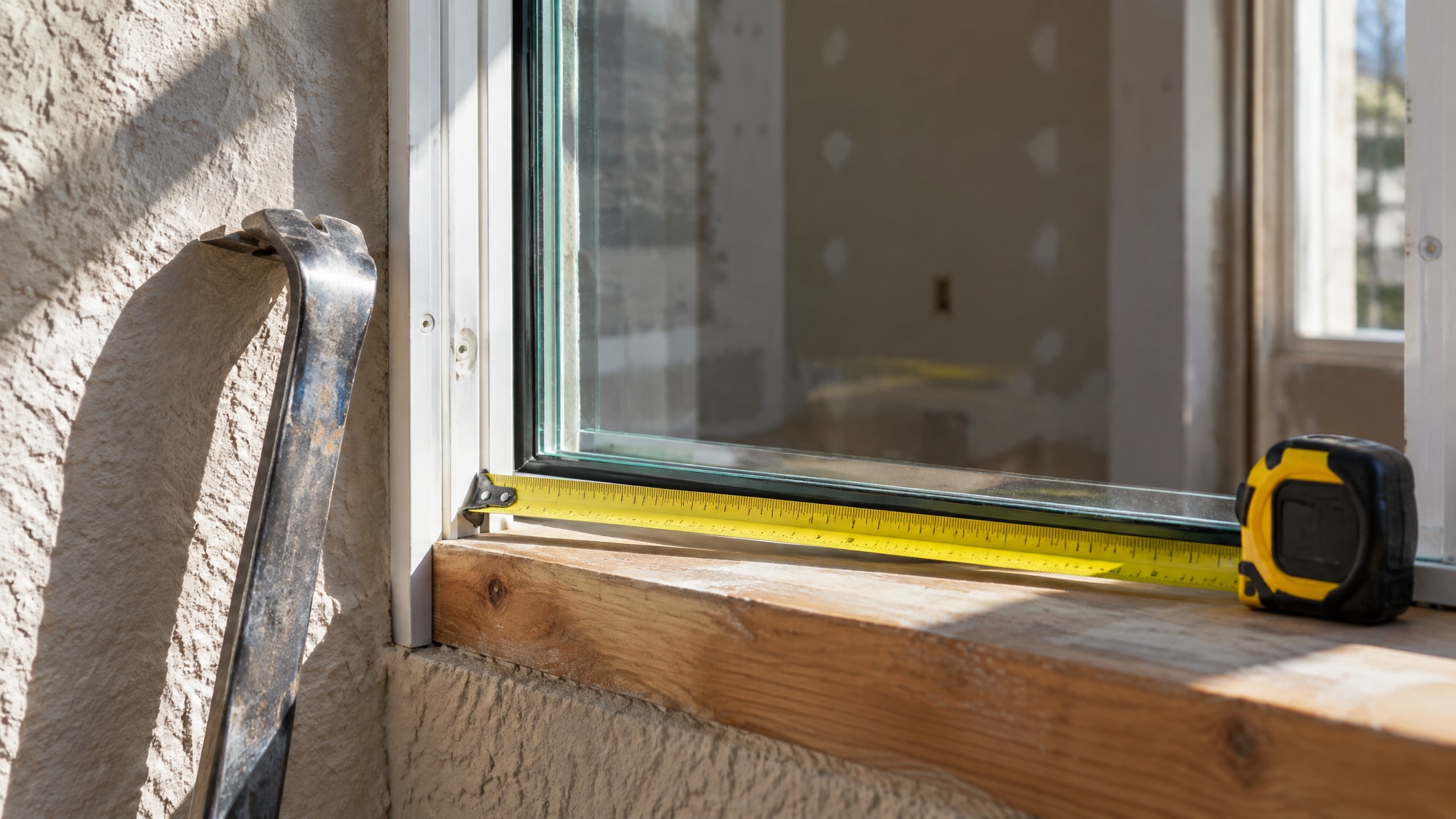
We measure the rough opening, check it for square and plumb, and look at the sill and the framing around the door. This is also when you settle the glass and hardware choices, because a sidelight, a decorative insert, or a different lockset changes both the build and the price.
Once the old door is out, a soft sill or damaged framing is a common surprise. The install plan should say who repairs it and how it changes the quote. We flag it in the written estimate when we can see signs of it, and if it only shows up behind the old door, we tell you what we found and what the repair adds before we go further.
On install day: removal, setting, sealing, and a final check
The crew removes the old door and frame, cleans up the opening, and repairs anything the quote covered. Then they set the new door, fasten it, and seal it. Last, they open and close it, run the lock, and check that the gaps are even all the way around.
You should be home or have someone there for that final walkthrough. It takes a few minutes, and it's the time to say if the latch feels tight or the weatherstripping looks wrong.
Impact products add steps to this routine. Our article on what install day looks like for impact products shows how it differs.
Why manufacturer-installer control matters for fit and warranty
Most door jobs involve at least two companies: one that sells the door and one that hangs it. When something goes wrong, each can point at the other.
One team answers for both the door and the install
We build the door and we install it. That cuts down on fit gaps for a simple reason: the people who cut and assemble the unit know the measurements the installer took, and the installer knows how the door was built. If a gap shows up at the top of the frame, nobody has to work out whether the door was made wrong or hung wrong, because the same team answers for both.
Warranty responsibility stays in one place too. You don't chase a retailer for the door and a separate contractor for the labor.
Pricing follows the same logic. We're a manufacturer, so we control quality and cost from production through installation instead of reselling third-party products. That's what manufacturer-direct pricing means in practice: there's no middle step adding margin between the shop and your front step.
What to confirm in writing before you sign
Warranty talk is cheap until you see the paper. Ask for the terms in writing and read them for what they actually cover, not for how long they run.
What the door warranty covers, including the slab, frame, glass, and finish.
What the labor warranty covers, and who comes back if the door binds or leaks after install.
Which conditions void coverage, such as improper finishing or damage from an unrelated repair.
Who you call, and whether it's the same company that built the door.
If a quote doesn't answer those four, ask before you sign, not after.
Hurricane-rated entry doors for Southwest Florida storm season
On a coastal home, or any house where the front door takes wind-driven rain, a storm-rated entry door is usually the right call. The front door is a large opening, and if it gives way, wind gets inside and pressure builds in the house. That's why many homeowners in these counties put the entry door on the same list as garage doors and windows.
The rating changes the install. A rated door is tested as a complete assembly, so the frame, anchors, and seal have to go in the way the product was tested, with the right fasteners at the right spacing into solid framing. That makes the opening condition more important. A soft sill that might be patched under a standard door has to be sound before a rated one goes in. For the rating terms and code detail, read how hurricane ratings apply to entry doors.
Because we make the hurricane protection products as well as the entry doors, storm-rating and install questions stay with one company.
Impact-rated versus standard entry doors
A standard entry door looks the same from the street and can be a good door for a home that sits inland with shutters or other protection already in place. An impact-rated door is built to resist wind-borne debris, and you won't need shutters over that opening.
If you're still deciding between door-level protection and shutters, see impact doors compared with hurricane shutters. A rated door costs more than a standard one, and it won't help if the windows and garage door beside it are unprotected.
How to vet a local door installation company
Any buyer can run these checks on any installer, including us. They take a phone call or two and they'll save you from a bad hire.
Who does the installing. Find out whether the company's own crew hangs the door or subcontracts it, and whether the same company made the door.
What the written warranty covers. Get it for both the door and the labor, not as a verbal promise.
Storm-rating paperwork. If you're buying a rated door, ask for the documentation for that exact door, not a similar model.
Proof of insurance. Ask for a current certificate, and check it's in the company's name.
Local references. Ask for recent jobs in your county, and if you can, look at a door that's been through a few storm seasons.
County specifics matter too. For Manatee homeowners, what to look for in a Manatee County installer goes into more detail.
Scheduling your quote and install date
The booking path is short. You request a quote by phone or online, we review the details, and we send a written quote. Once you approve it, we set the install date.
What to have ready when you request a quote
You'll get a faster and more accurate quote if you send:
The door size, or the size of the opening if you don't know the door's.
Photos of the opening from outside and inside, including the sill and the frame.
The style you want, such as solid, glass, sidelights, or a storm-rated unit.
Your address, so we can confirm it's in Sarasota, Manatee, or Charlotte County.
Photos don't replace the measure. We still check the opening in person before the order is final.
What drives the installed price
Price follows the job, not a flat number. Door type is the first factor, since a solid slab, a door with glass, and a unit with sidelights cost different amounts to build. A storm rating adds cost because of the materials and the anchoring it requires. Opening condition comes next: sound framing costs less than a repaired sill. Trim and permit work finish the list.
A good written quote lists those pieces separately, so you can see what you're paying for the door, the install, any repair, and any permit. For local figures, see entry door replacement costs in Sarasota.
Ready to book? Call or send a request online with your door size, opening photos, and the style you want. We serve Sarasota, Manatee, and Charlotte counties, and once you approve the written quote we'll pick an install date.
Frequently asked questions
How much should a new front door cost installed?
There's no single figure, because the price depends on door type, storm rating, the condition of the opening, trim, and any permit work. A solid slab costs less than a door with glass, and an impact-rated door costs more than a standard one. Ask for a written quote that lists each piece so you can compare it line by line.
Is Home Depot or Lowe's better for doors?
The better question is who builds the door and who installs it. A store sells a door, and the install can be handled by a separate contractor, so fit and warranty questions can split between two companies. We manufacture, assemble, and install our own entry doors, so both stay with one team.
What is a person who installs doors called?
Most people say door installer or door contractor. Some call them carpenters, since door work overlaps with finish carpentry. What matters is whether the installer works for the company that made the door.
How much should I pay someone to install a door?
Labor depends on the job: a straight swap into a sound opening costs less than one that needs sill or framing repair, and a storm-rated door takes more anchoring work. The quote should show labor separately from the door, along with any repair and permit work. If labor is lumped into one number, ask for the breakdown.

Comments